
Press release
A project conducted by La Musée, curated by Azad Asifovich & Stefano Vendramin with Oona Doyle as a scientific collaborator.
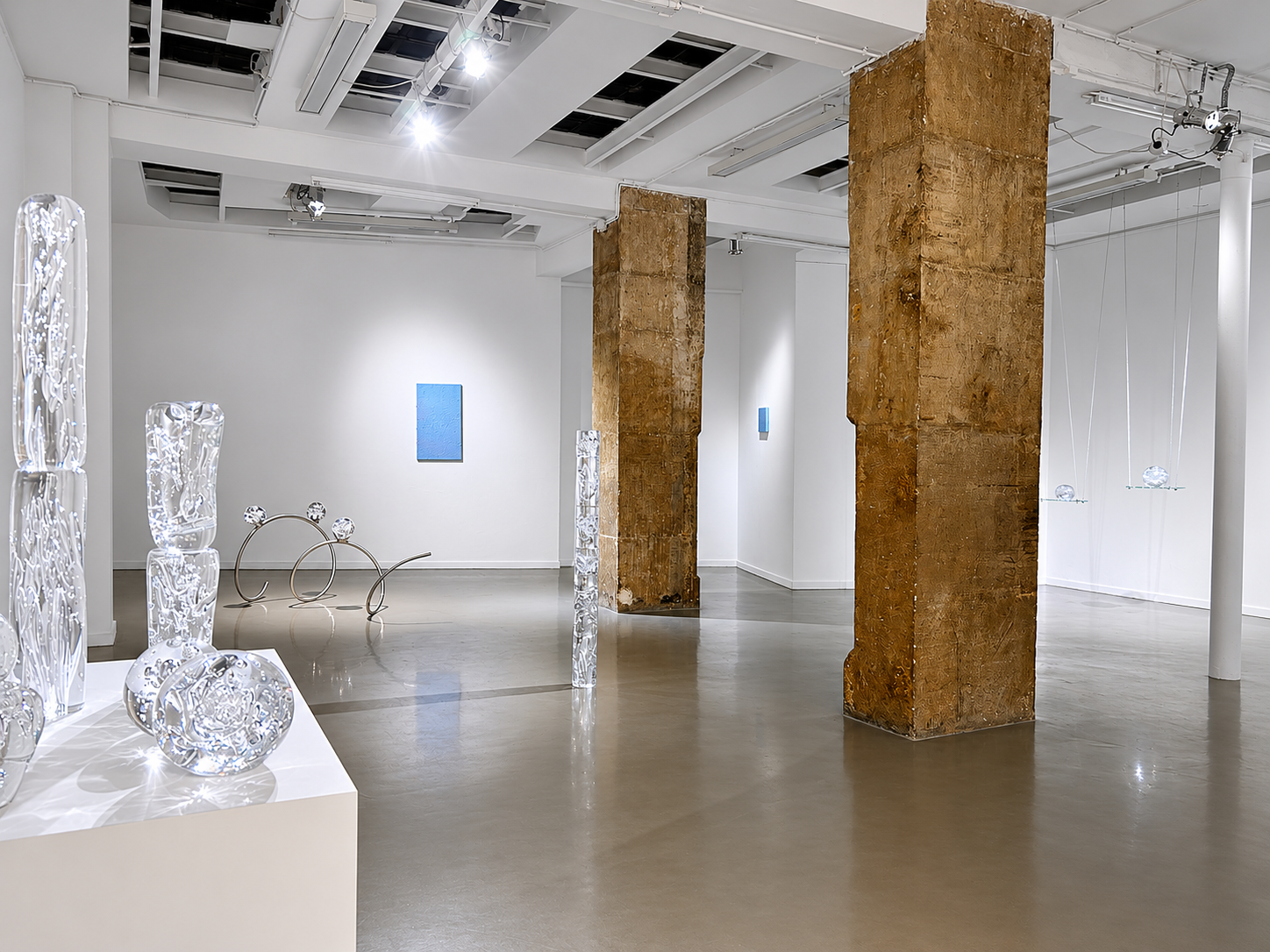
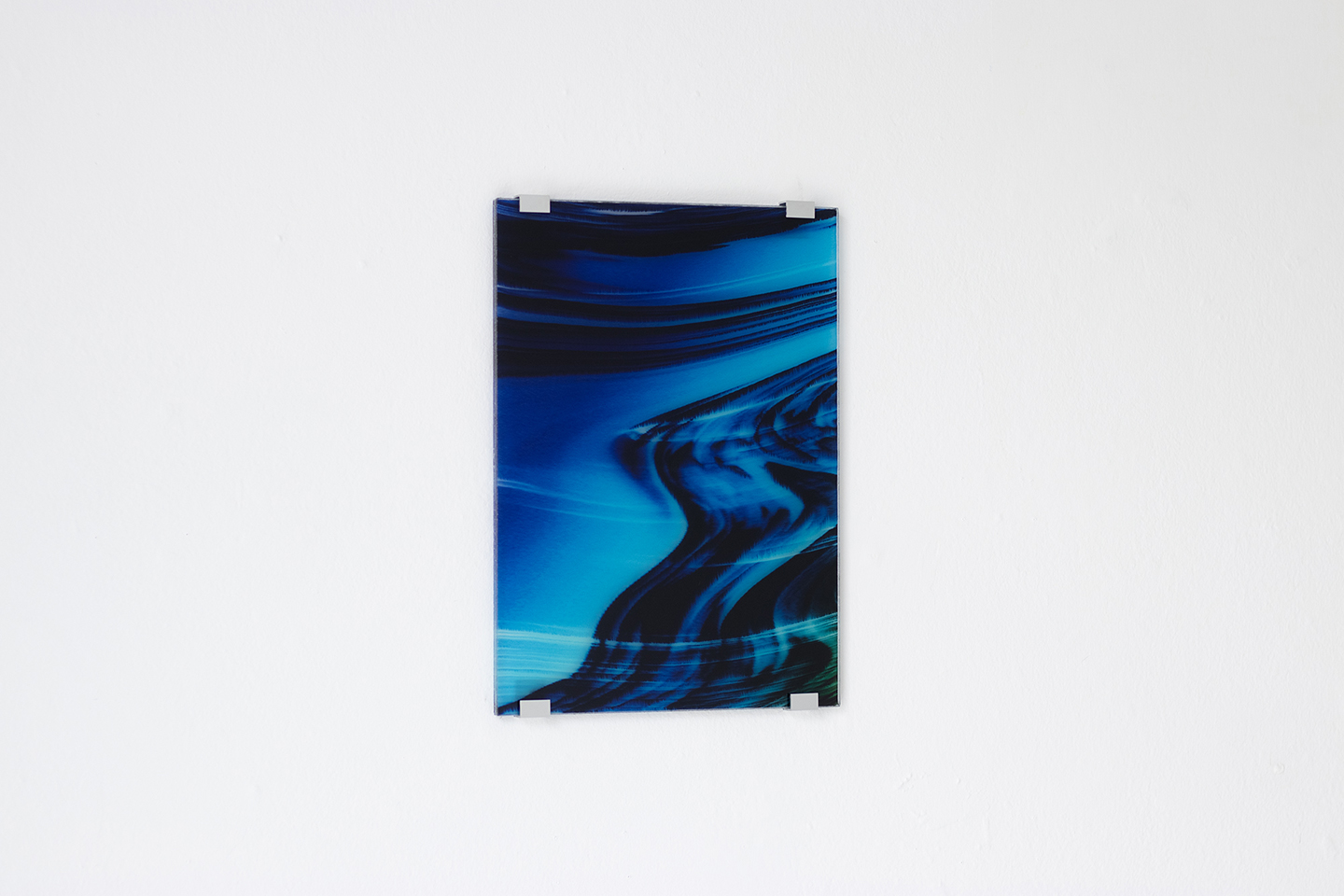
The exhibition is composed of sculptures, objects, and printed images, all exploring questions of air, particles, and atmosphere. Through ephemeral materialities and shifting spaces, Josefina Nelimarkka’s subtle and poetic works reveal the fleeting nature of time as well as the sensitivity of the environment, creating new ways of feeling, perceiving, and being present.
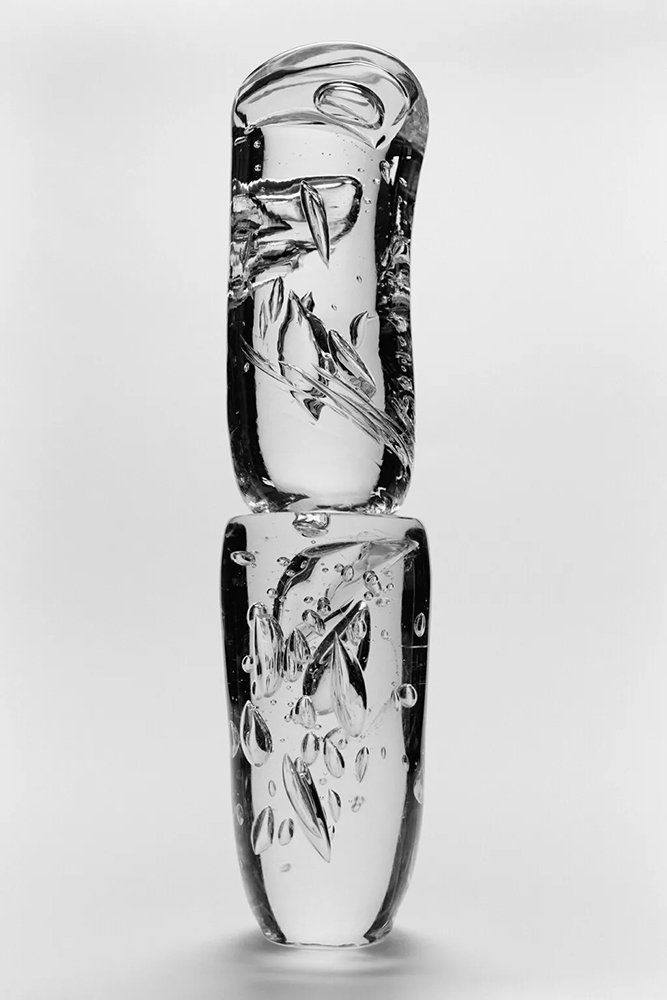
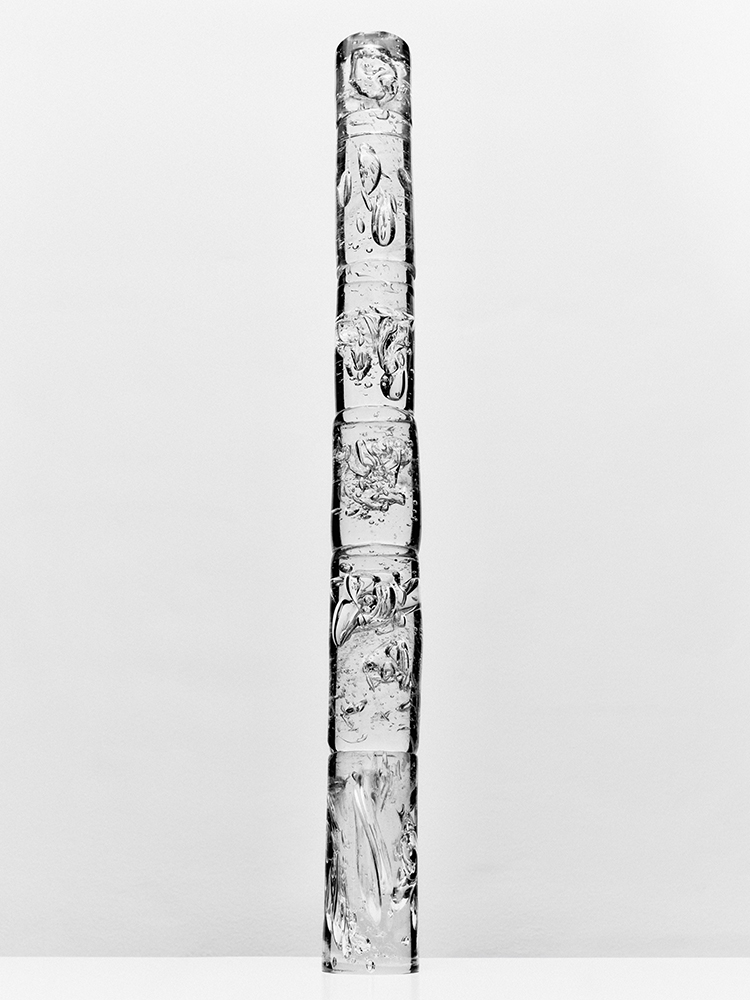
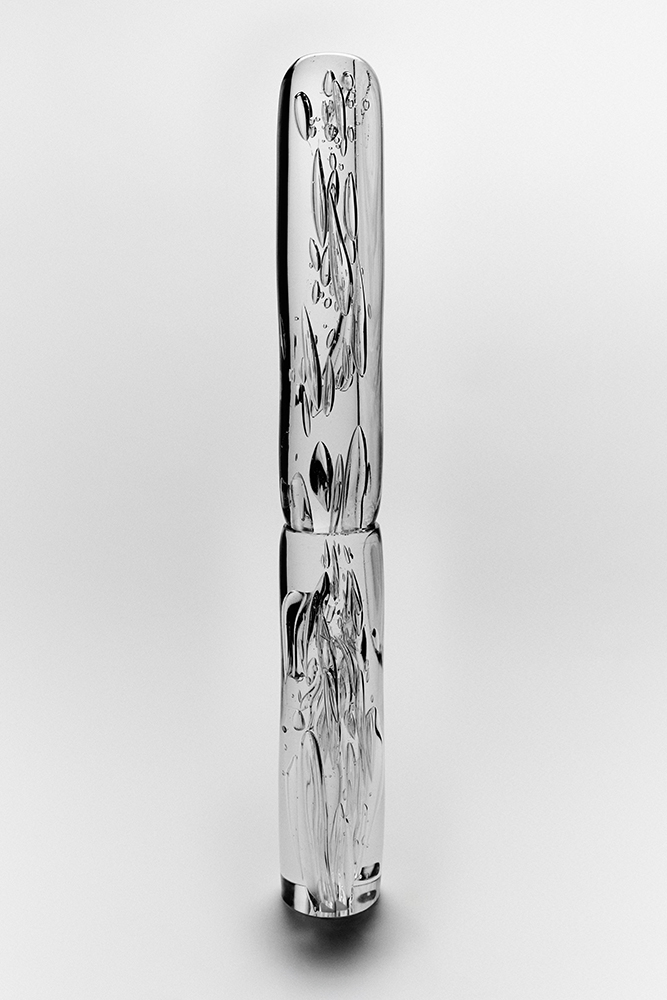
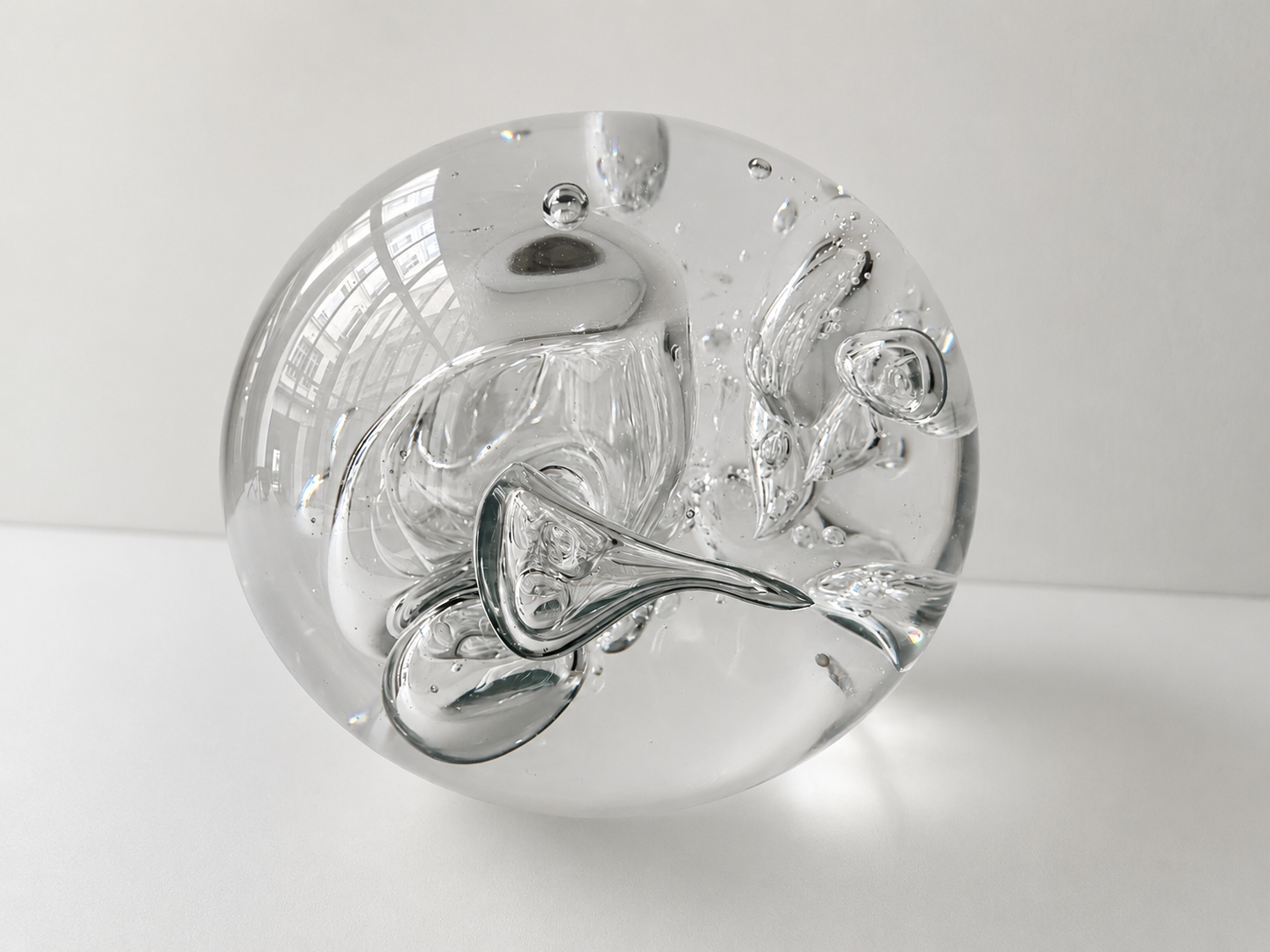
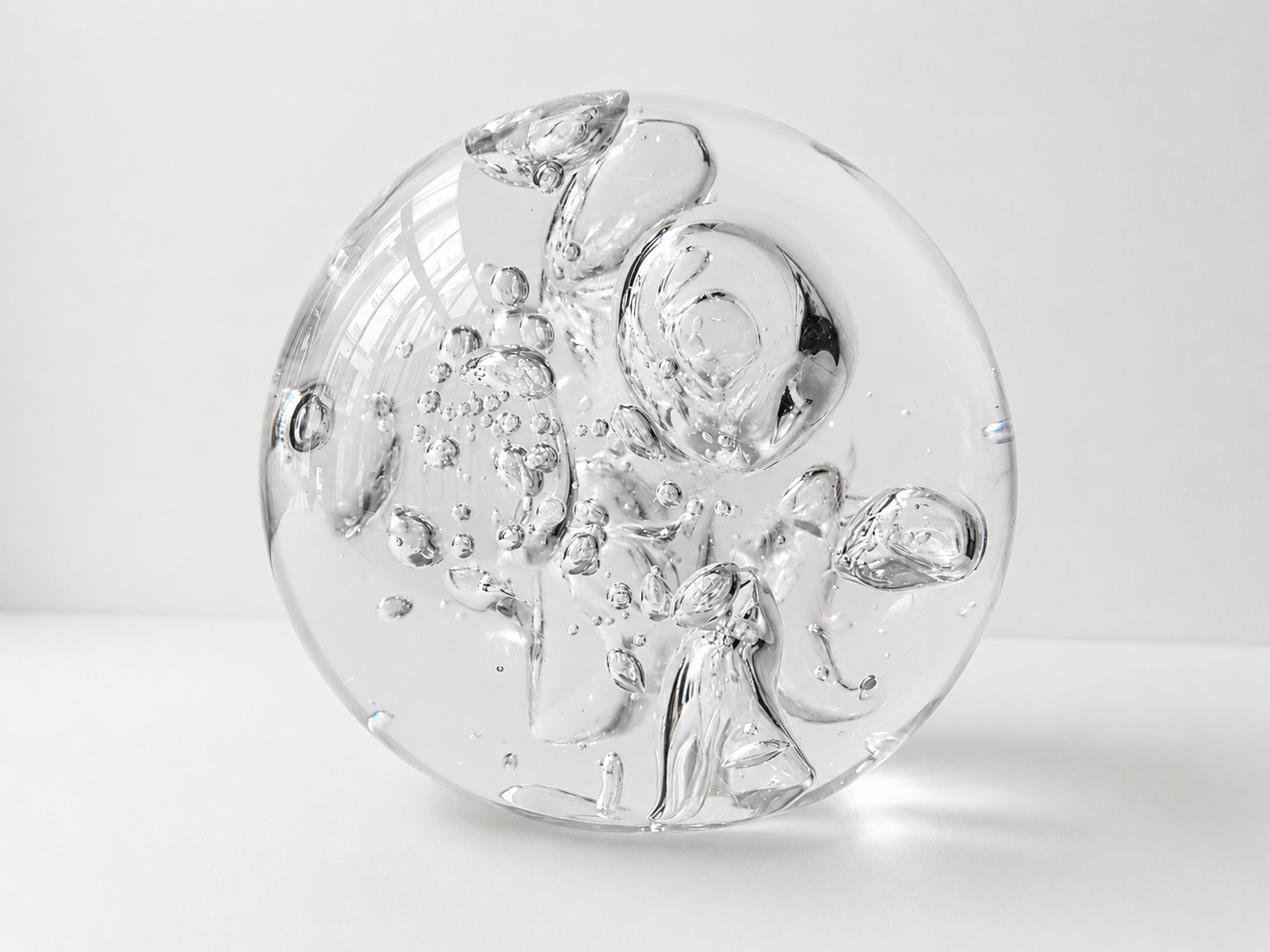
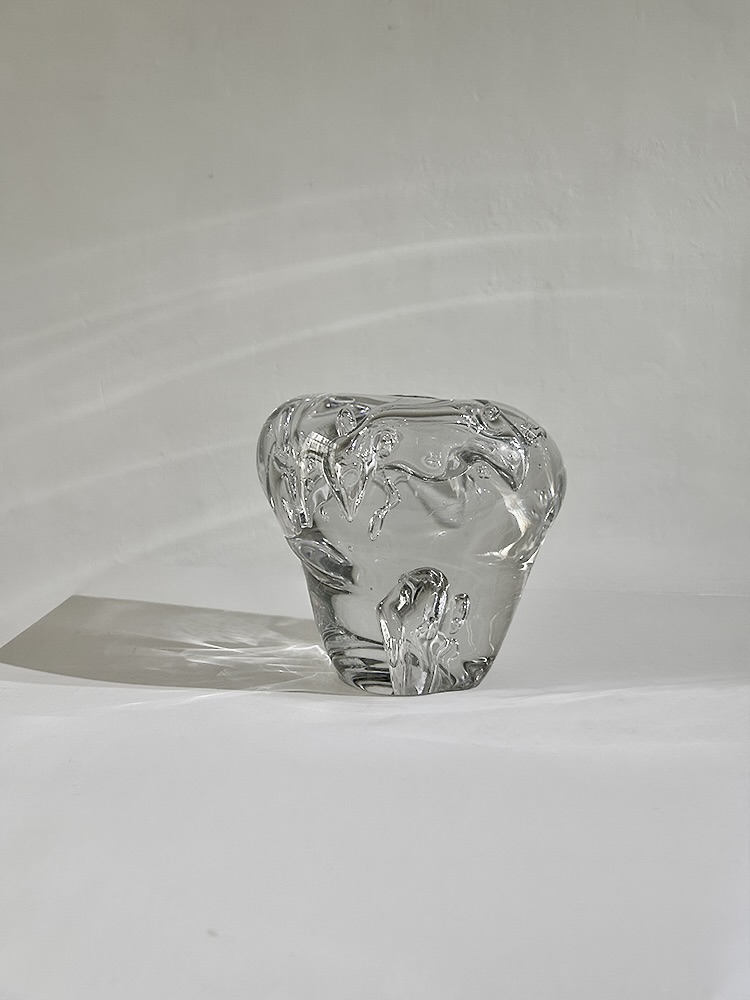
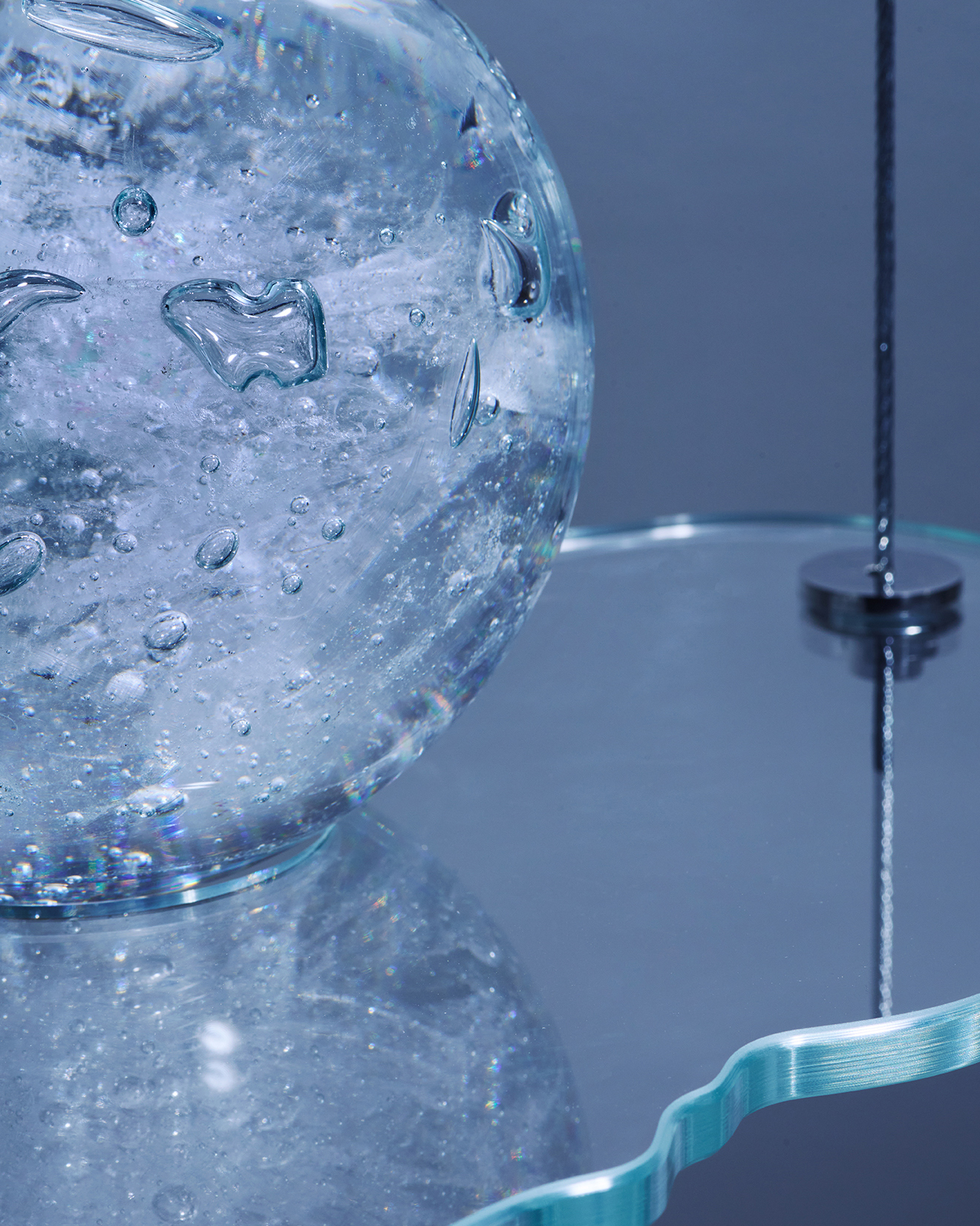
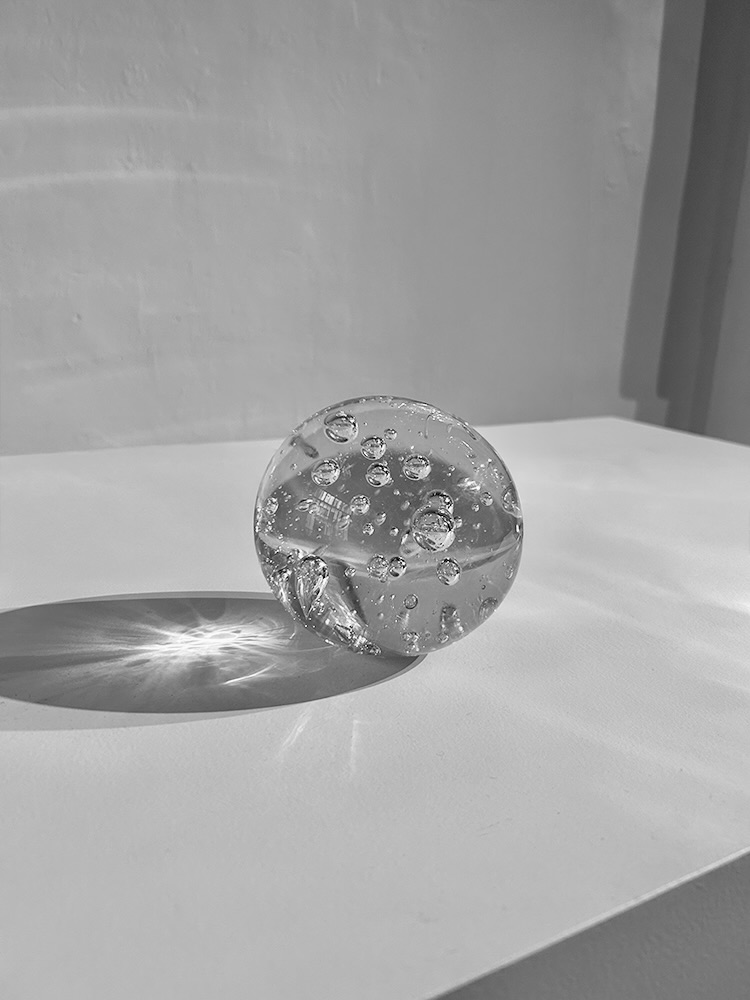
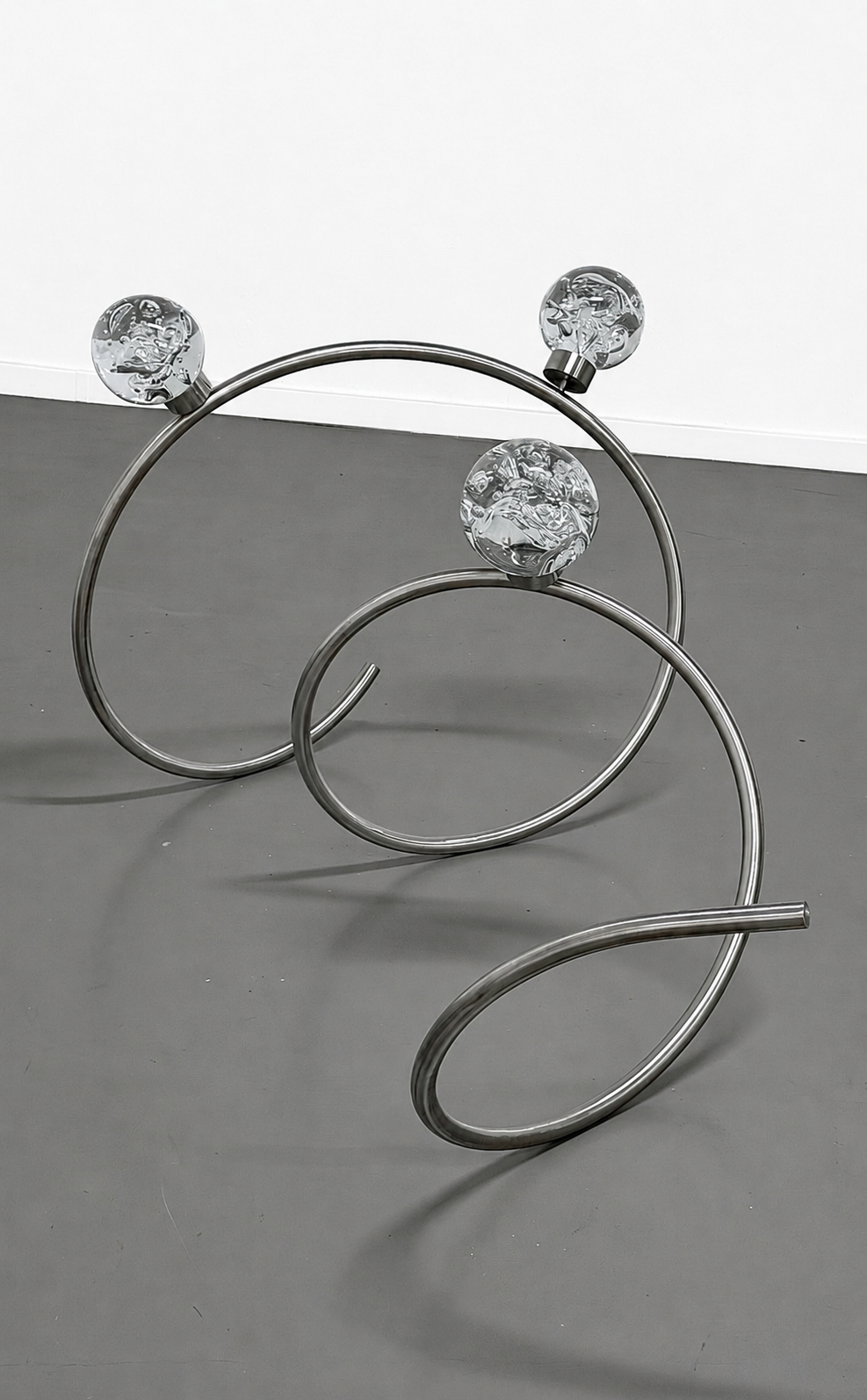
Josefina Nelimarkka's glass works begin as material explorations, where air becomes visible through each piece becoming ‘a form within a form', sculpting the hidden patterns of the natural world.
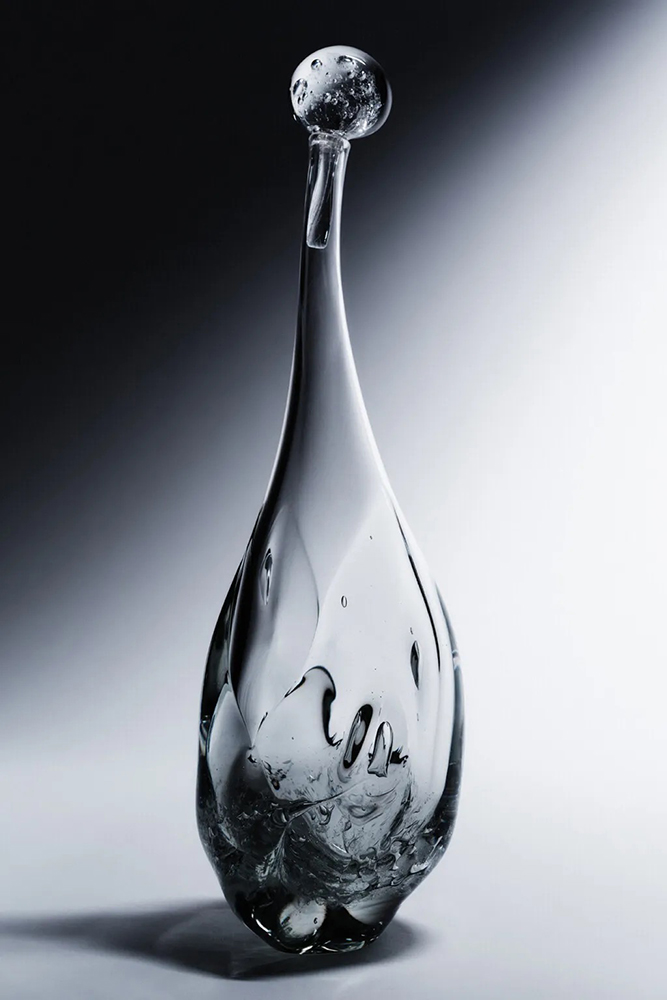
Glass, in its transparency, operates as both material and interaction, between interior and exterior, between body and environment. Through glassblowing, air becomes not only process, but also a poetic and elemental force carrying memory and atmospheric information. Presence, in this context, is not merely the act of being, but sensing a mode of attention where breath, air and atmosphere are blown into alignment.
Curatorial text by Azad Asifovich
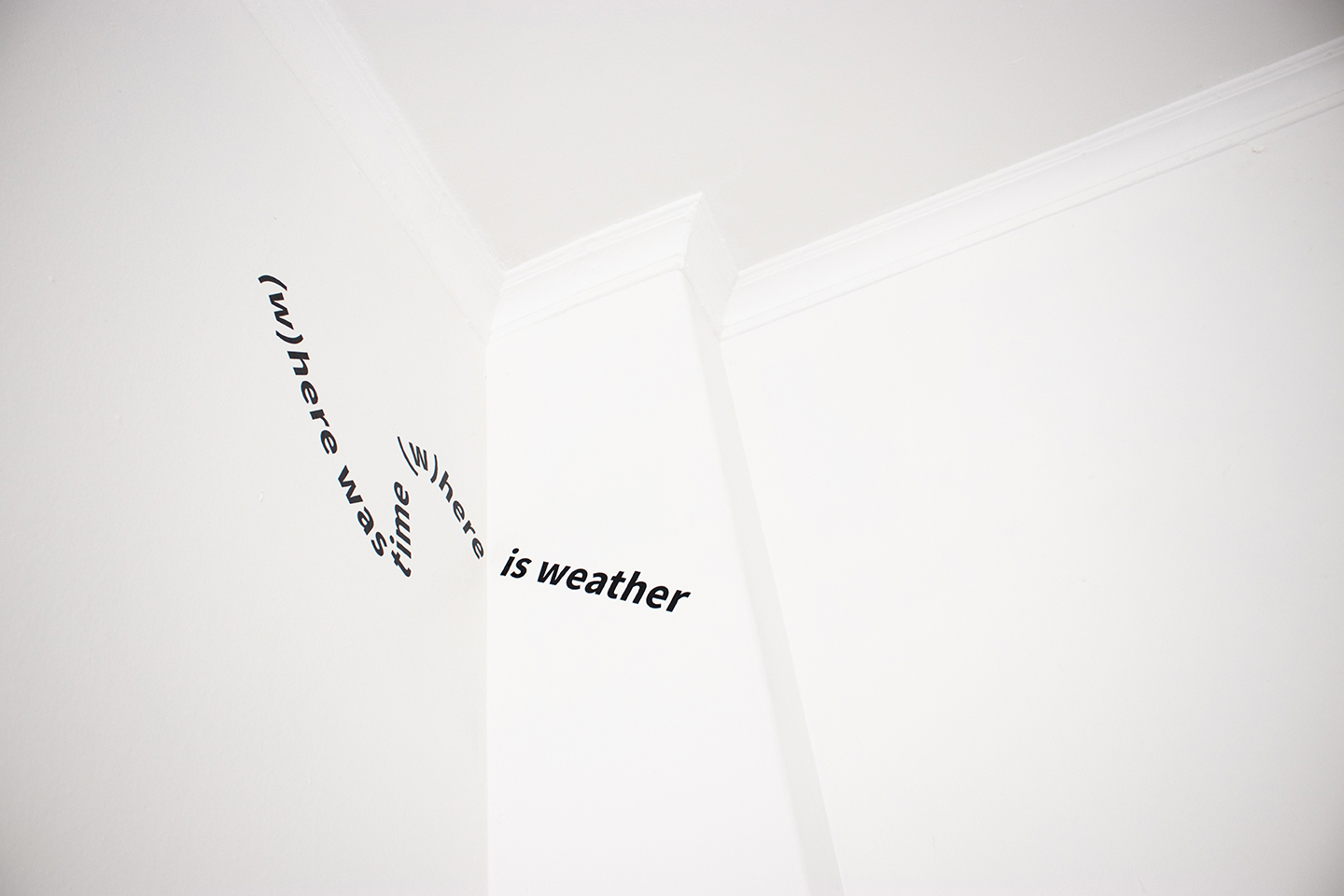
(W) here was time borrows its title directly from a work by Josefina Nelimarkka. Written on the wall as an in situ intervention, the phrase functions both as a disturbance of language and as a way of poetizing space. The displacement of a single letter shifts time toward climate, geography toward atmospheric condition, place toward a mutable state. In Nelimarkka’s practice, language often operates as an unstable material, capable of producing multiple realities simultaneously.
The exhibition brings together a body of glass sculptures, images, and an in situ intervention in which presence is constructed through almost nothing: an air bubble, a surface tension, a luminous condensation. Air becomes sculptural matter. This attention to breath and invisible phenomena runs throughout Nelimarkka’s practice, particularly in her research on clouds, aerosols, and climatic transformations.
Glass occupies a central place in her work. This is not a decorative use of the material, but a reflection on the very conditions of sculpture itself. Traditionally associated with mass, weight, and opacity, sculpture here becomes almost atmospheric. The works appear light, at times close to an apparition or a physiological trace, while still retaining the physical density inherent to glass.
This contradiction runs throughout the exhibition
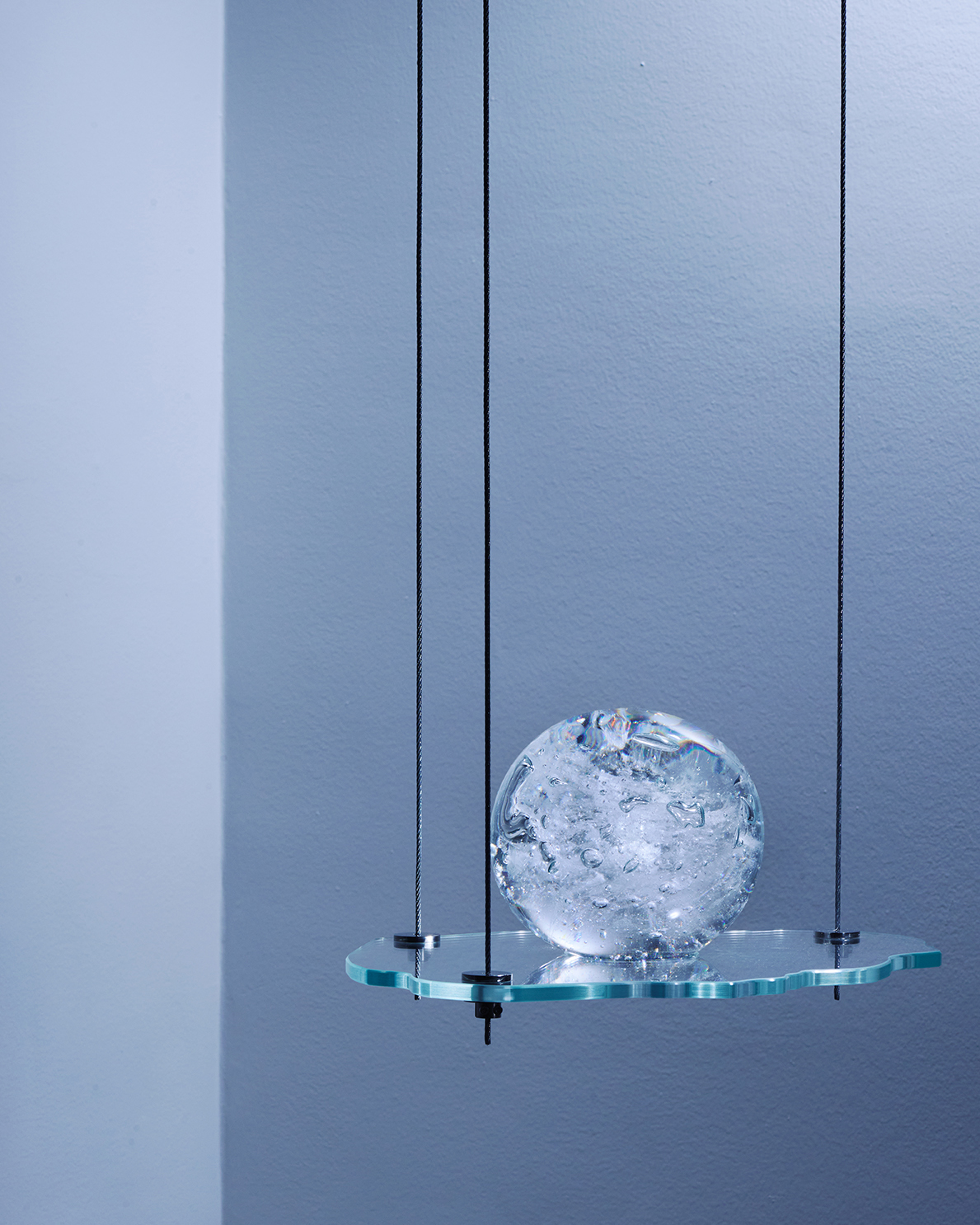
In Nelimarkka’s work, transparency does not erase presence; it destabilizes it. The sculptures appear and disappear according to variations of light, reflections, and the movement of the viewer’s body. They demand a slower form of attention. Visibility is never fixed.
This approach recalls certain modes of observation associated with the nineteenth century, when the boundaries between scientific research, natural phenomena, and artistic experimentation remained porous. Nelimarkka’s works sometimes evoke measuring instruments, observation devices, or attempts to capture the invisible. Yet science here does not serve to explain the world. It participates in a shared sensibility toward what circulates, transforms, or escapes perception.
Breath, condensation, vapor, and transitional states of matter thus become sculptural elements in their own right. The works do not seek to impose a definitive form. Rather, they produce a condition: something between appearance and disappearance, between time and weather, between presence and air.