
Press release
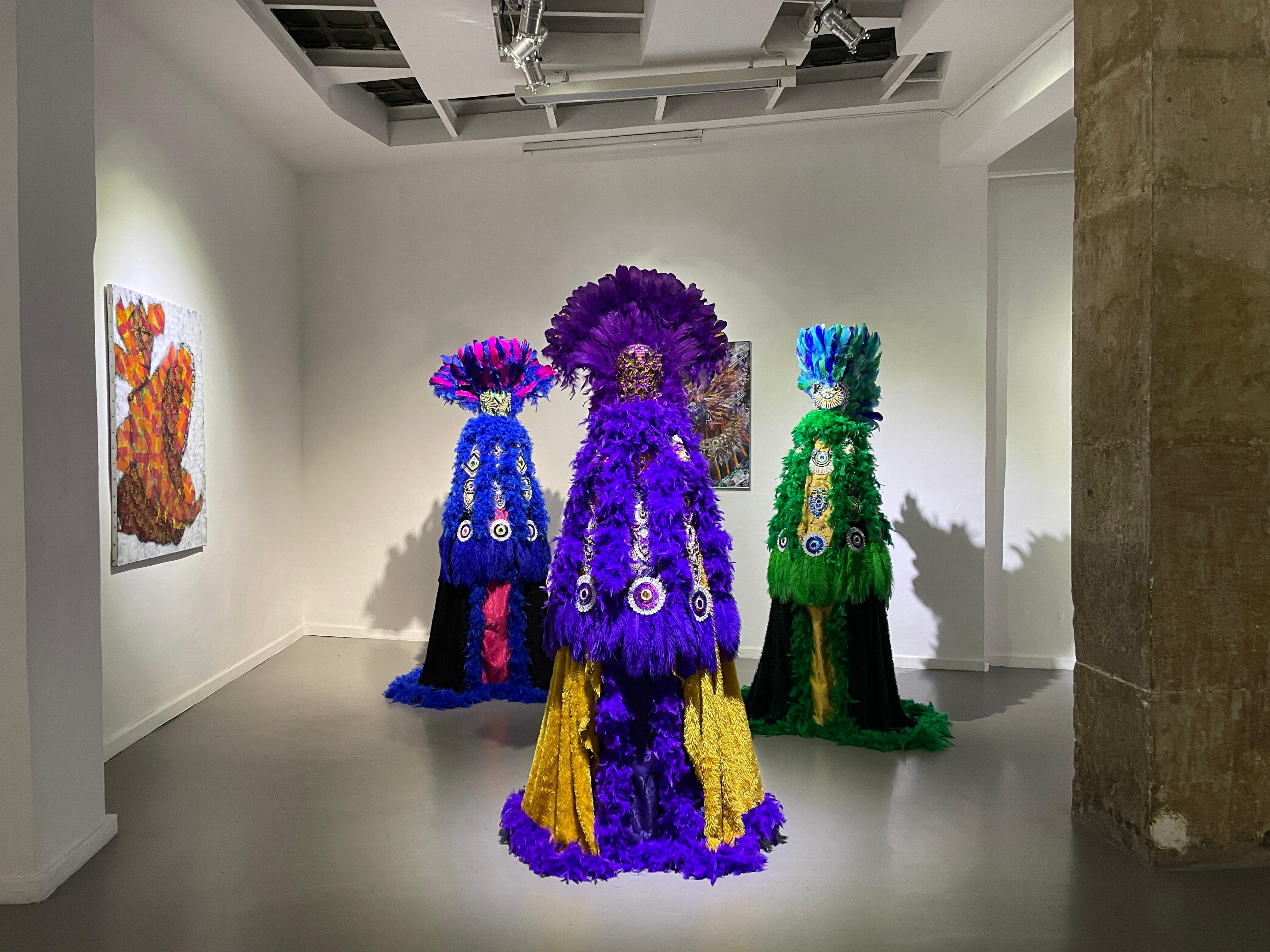
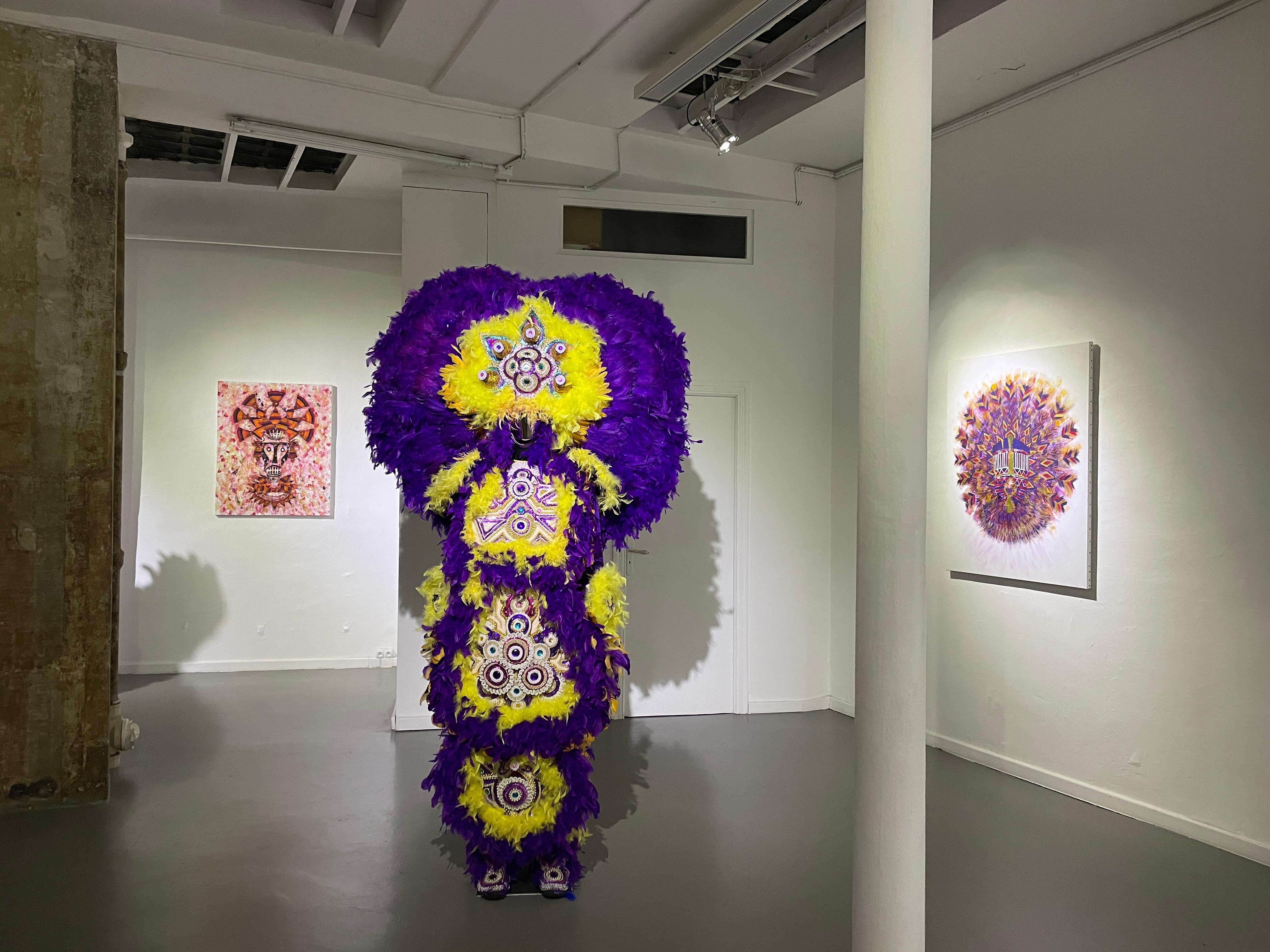
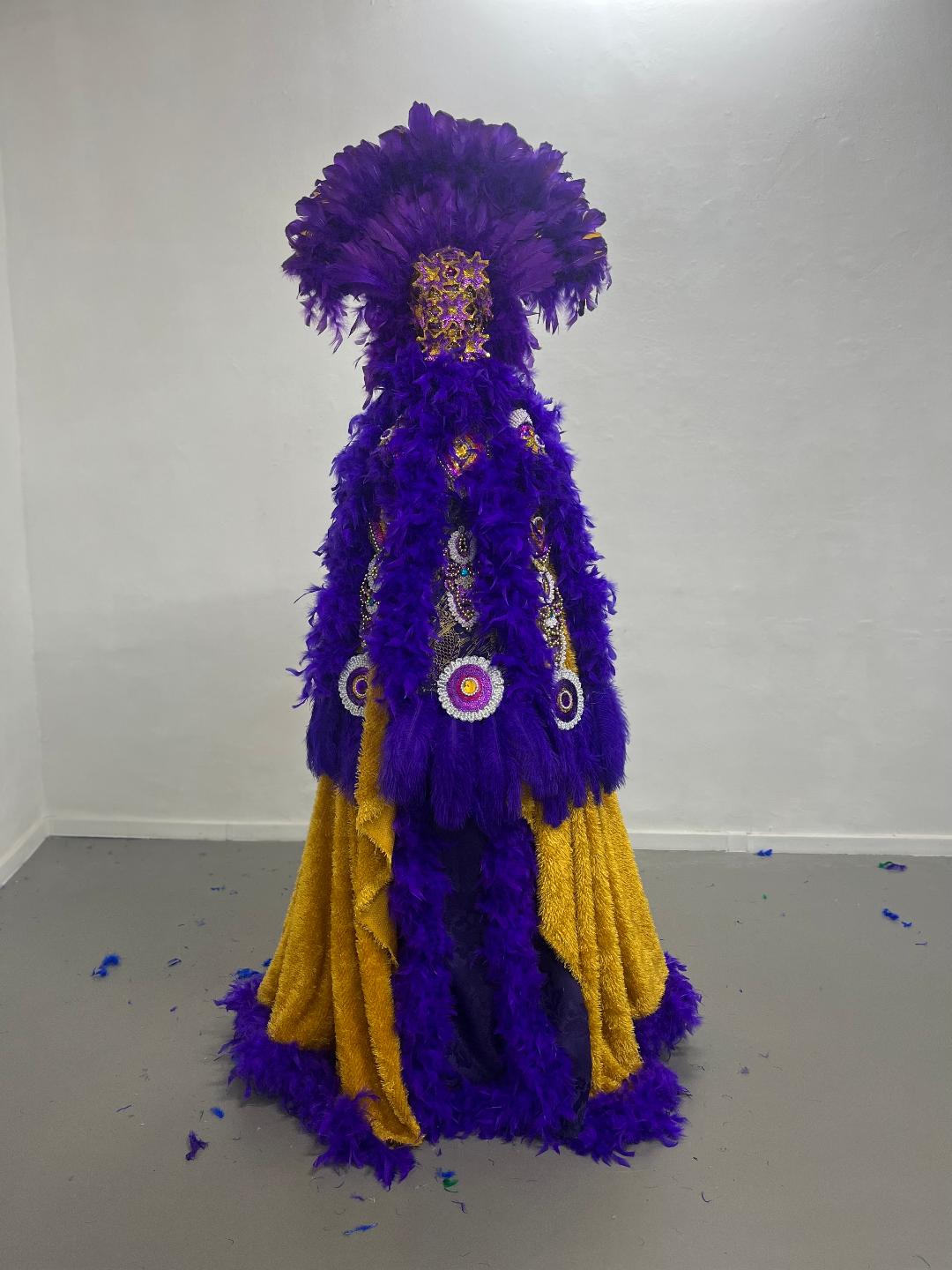
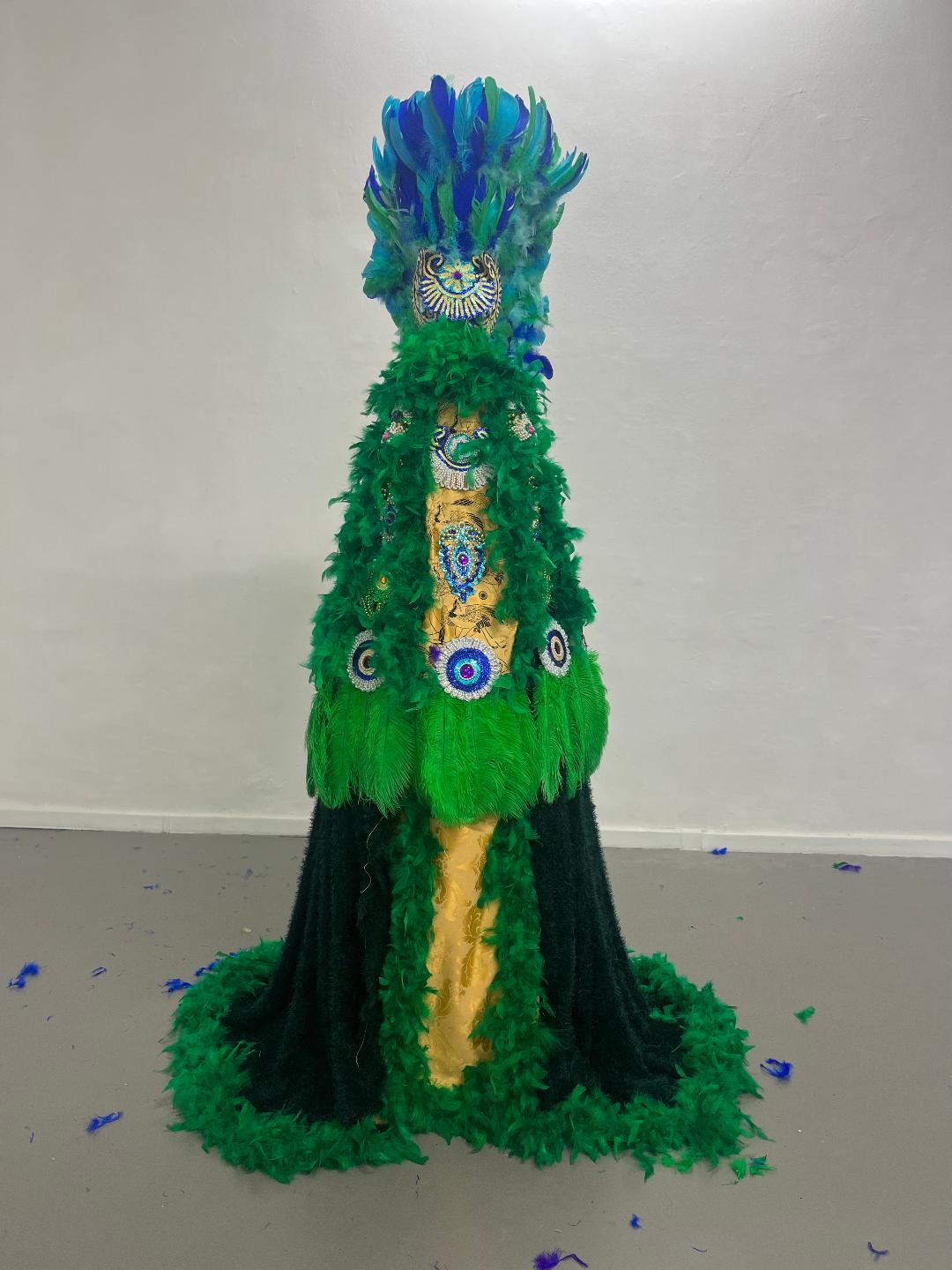
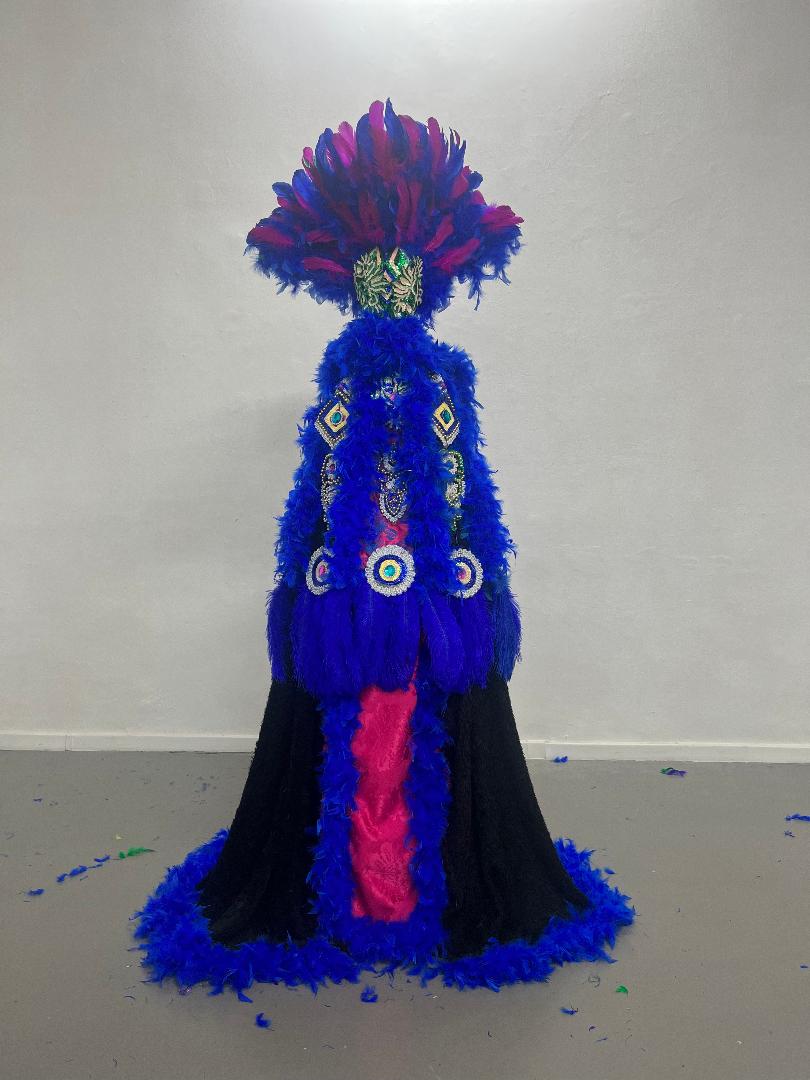
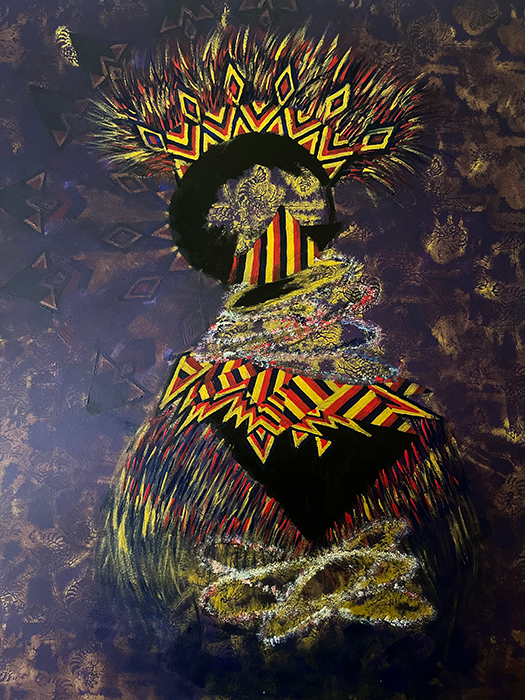
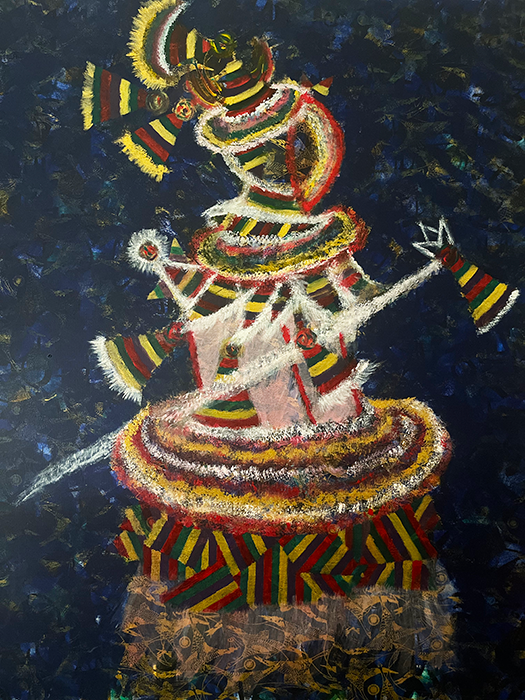
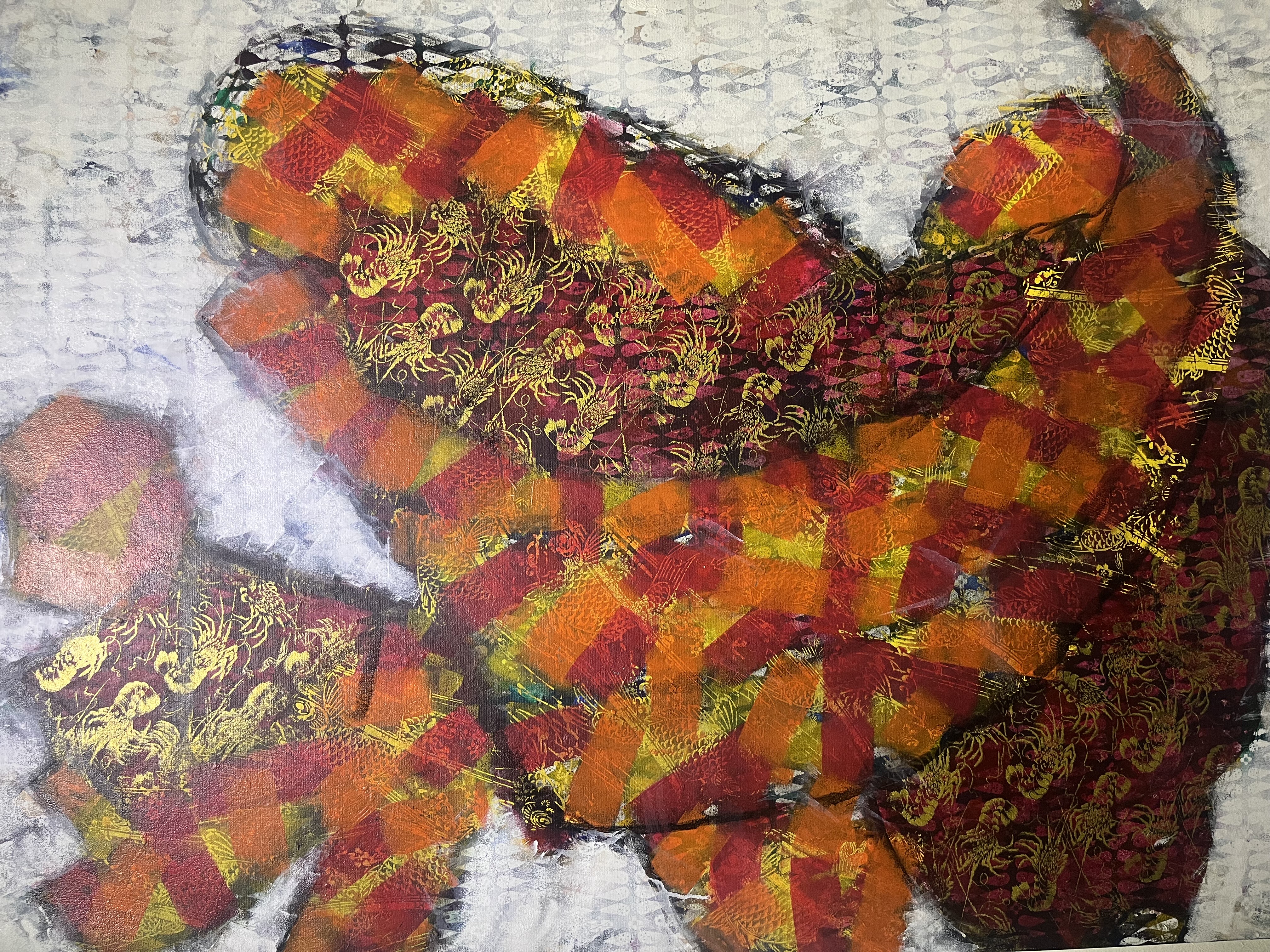
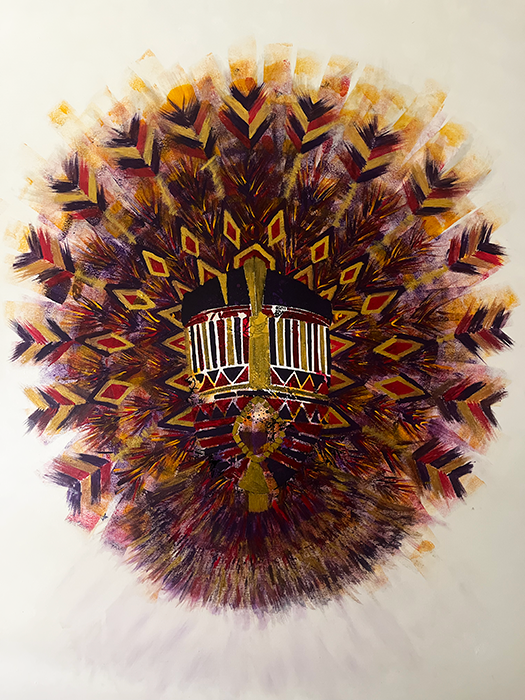
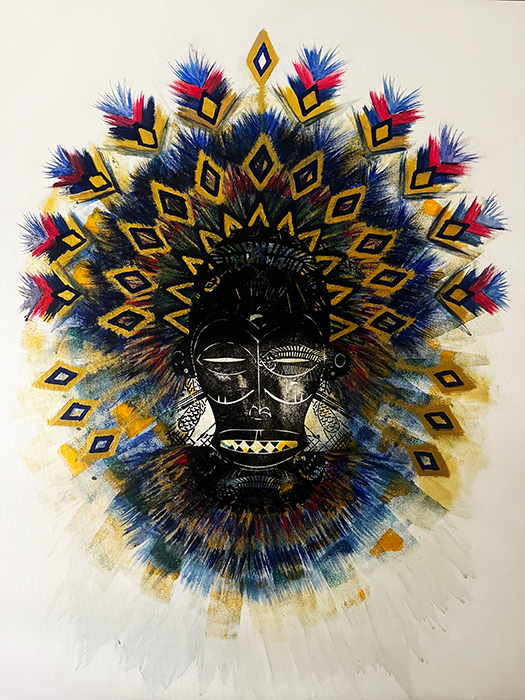
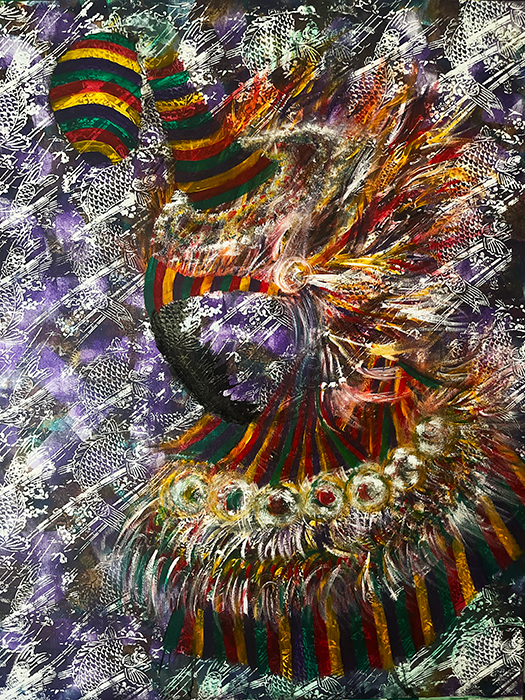
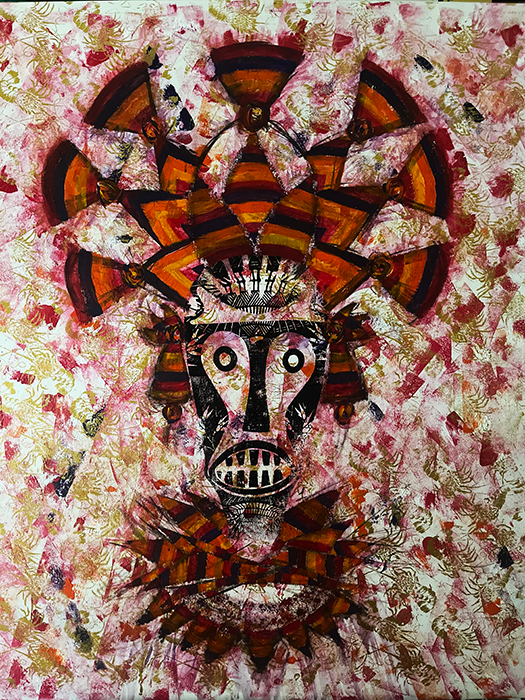
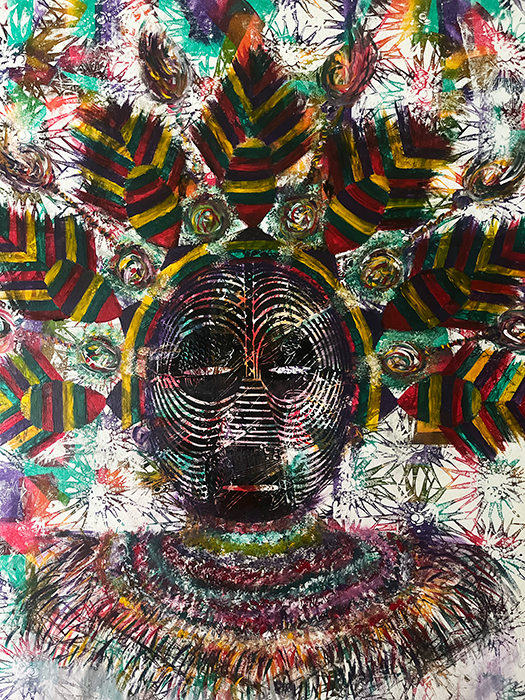
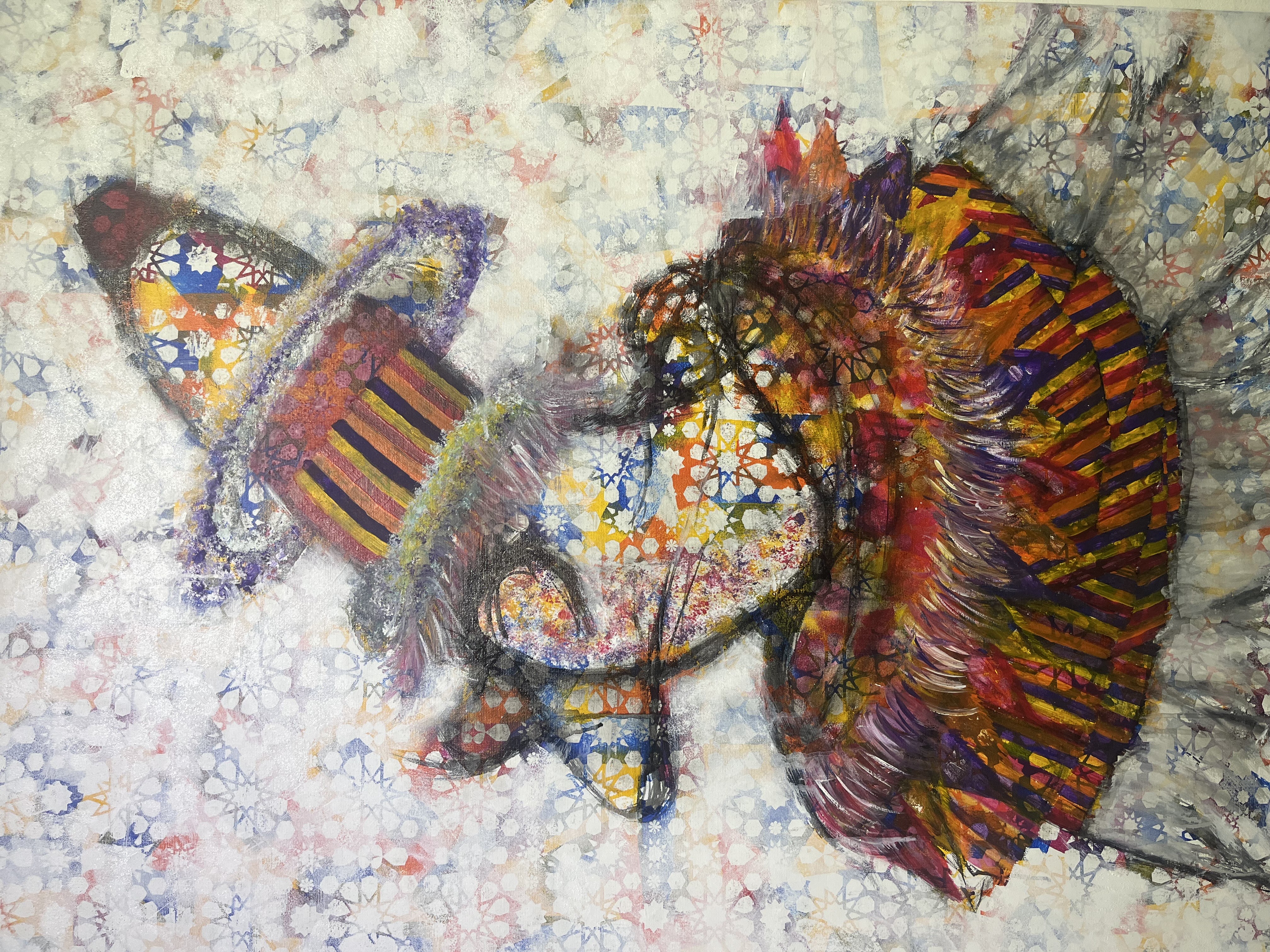
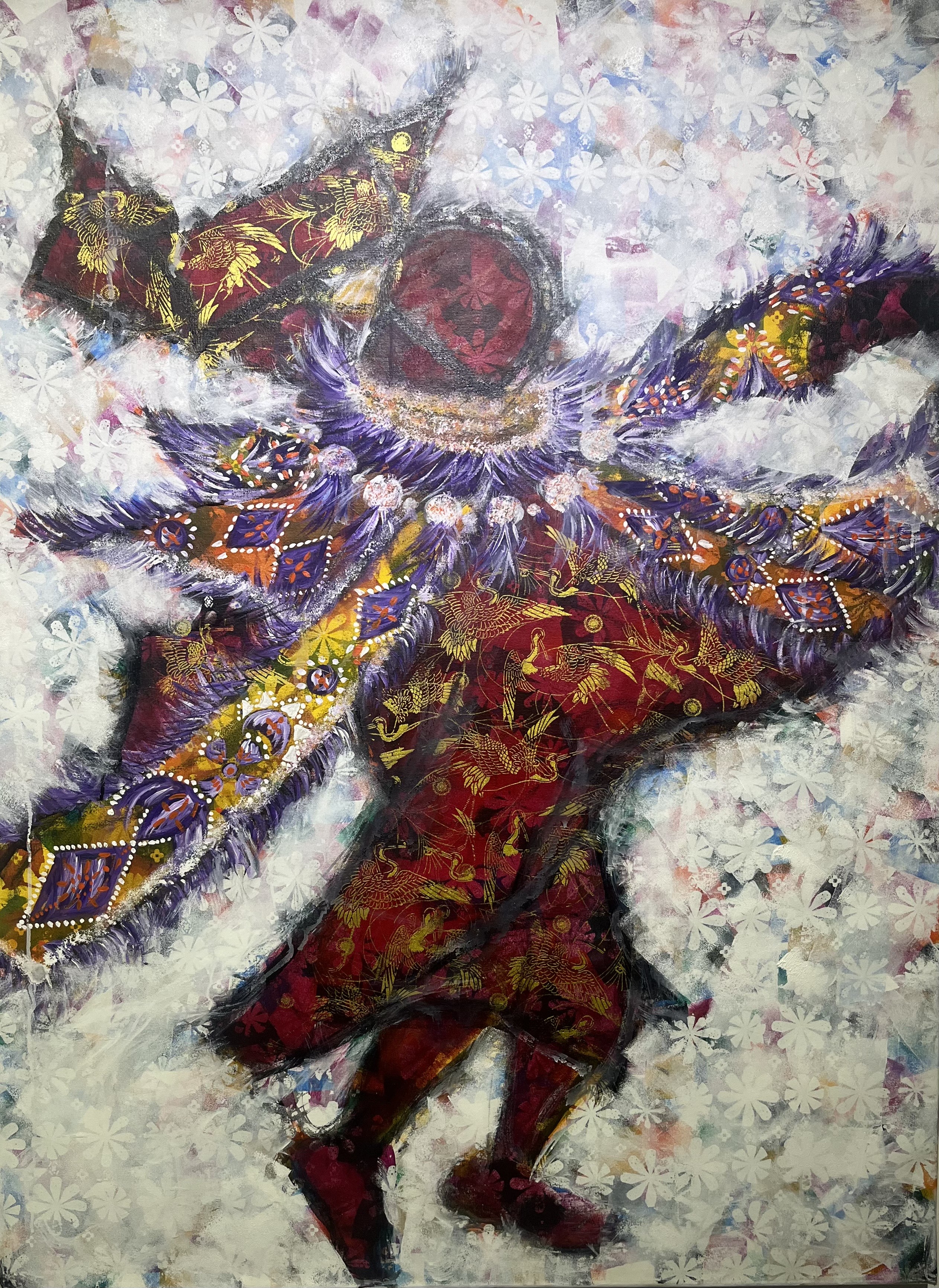
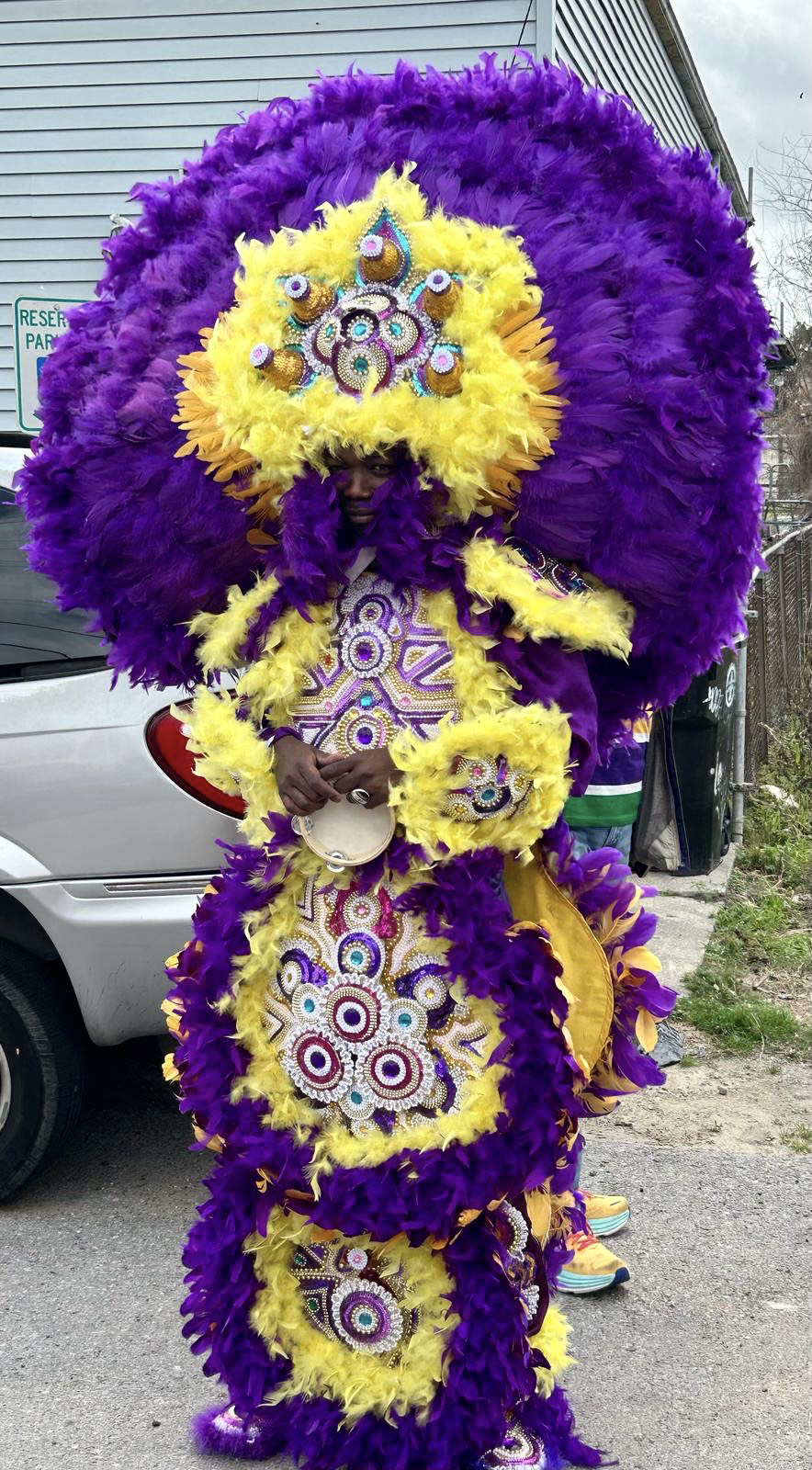
It all begins in New Orleans, with the induction of artist Smaïl Kanouté into the community of Black Indians Yellow Pocahontas Hunters (YPH). It is from this story, intimately linked to the famous Mardi Gras and their carnival, made emblematic by figures like the musician Louis Armstrong (himself inducted by a community), that Smaïl Kanouté chose to exhibit several of his costumes and works inspired by this experience.
This is his first solo exhibition in a gallery.
Smaïl Kanouté brings with him a dual experience, both European and African, which enriches and moves the single American lens. To complete this network, he also mixes Japanese references, notably that of the black samurai Yasuke Kurosan, a historical figure still largely marginalized in contemporary Japan. In addition to summoning the history of the transatlantic crossing between Europe, Africa and America, Smaïl highlights, through his work, the black presence in Japan from the 16th century, long invisibilized. Thus, from Château-Rouge, he extends cultural dialogues on a world scale. The exhibition Black Éguns is therefore neither limited to a journey to New Orleans, nor to a trip to Benin with the culture of the Egunguns (the returnees in the Yoruba tradition), but also constitutes a reflection on a postcolonial Europe and on a postcolonial Africa — an essential actor of what the Martinican thinker Édouard Glissant called, very carefully and with critical intent, creolization.
(It would be urgent today to retrace the history of this term, oh so disfigured. This notion first refers to an experience of violence. It then refers to an experience of creation, of what, within violence itself, has succeeded in constituting itself from fragments. But this creation carries with it, always, the memory of violence, but also that of forgetting, which then allows unpredictable meshing. Let’s listen to Édouard Glissant—excerpt from the book Introduction à une poétique du divers:
«In Louisiana for example: the creation of zydeco music is an application to traditional Cajun music of the rhythms and powers of jazz and even rock. In Louisiana, we find Black Indians, who are tribes born from mixtures between escaped black slaves and Indians. I attended in New Orleans the parade of Black Indian ethnicities, there is something absolutely unpredictable about them that goes beyond the mere fact of interbreeding. These cultural and linguistic microclimates that creolization creates in the Americas are decisive because they are the very signs of what is really happening in the world.»
It is not a question of praising, blind and naive, the creation within territories whose history is that of colonial slavery. It is rather a matter of accounting for the active principle that allows bodies to be in the world, that is to say, to be in the world with the other, this active principle being the relationship; memory of the earth, archive of the sacred).
The exhibition is therefore a story of modernity, where the black presence becomes one of the foundations of modern entrelacs. The exhibition is therefore a journey, but of the world, from Château-Rouge — this place-monde.
It bears witness to a postcolonial Europe with African, American and Asian histories. This Europe of diasporas can be an opportunity to rethink the contemporary situation in Europe, in order to think of a Europe-world (no longer melancholic of its former empires, but desirous of relationship, desirous of decentring itself to think other, otherwise, differently, from other shores, because Europe has no defined limits in the imagination).
But will this chance be seized?
Will we be able to hear this sacred without messianism, this sacred without the Law, without Scripture, this sacred that belongs to no one because it belongs to everyone, this sacred on a world scale, in the measure of the world, the one carried by the word relation, like this other word invented for the occasion: Blackegun?
Perhaps not.
The relationship is also a story of failures. But, fortunately, creation always knows how to deal with them.
Chris Cyrille